

A comprehensive e-commerce and order chain management ERP customized for the memorial jewelry sector, bridging the gap between funeral homes and end customers.

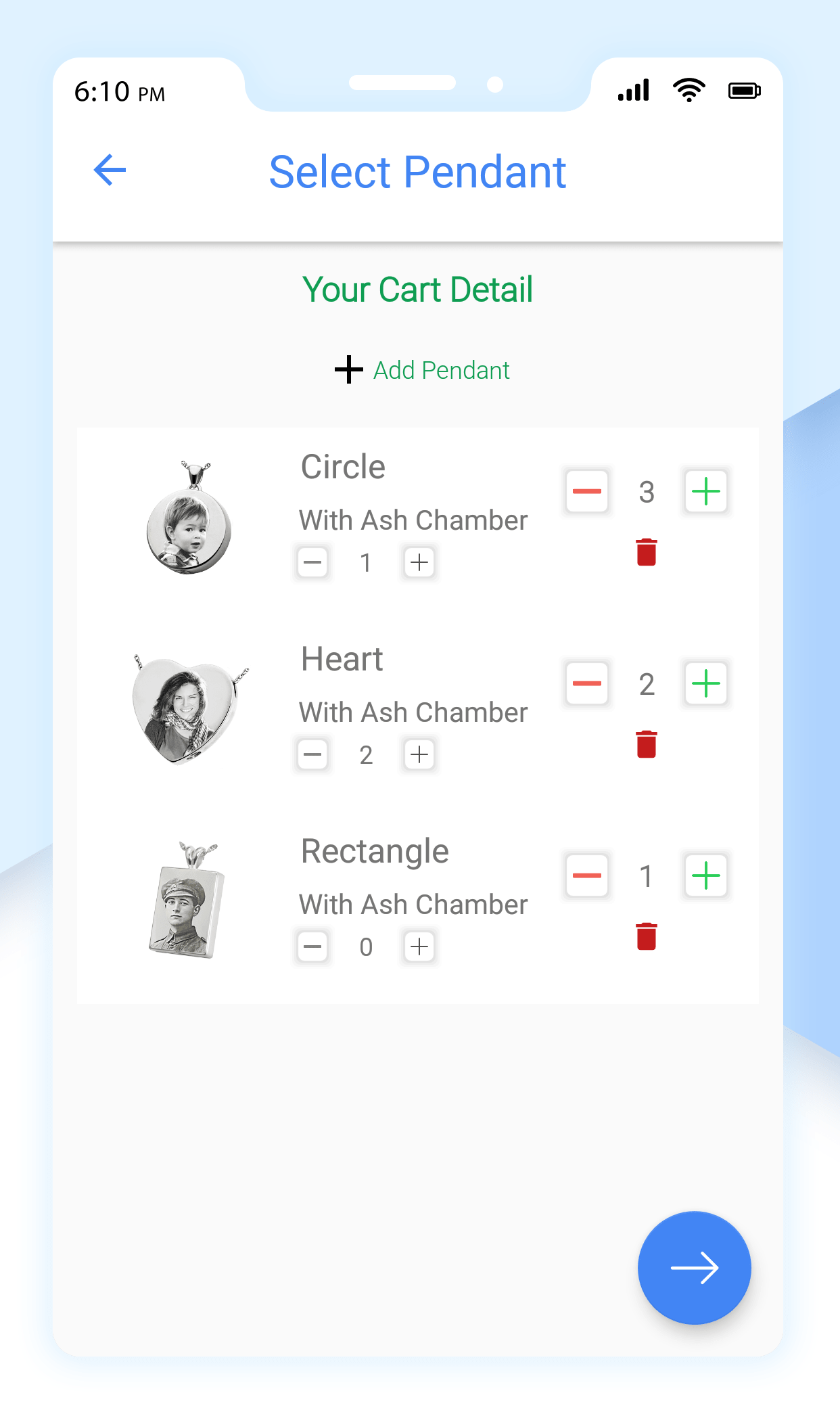
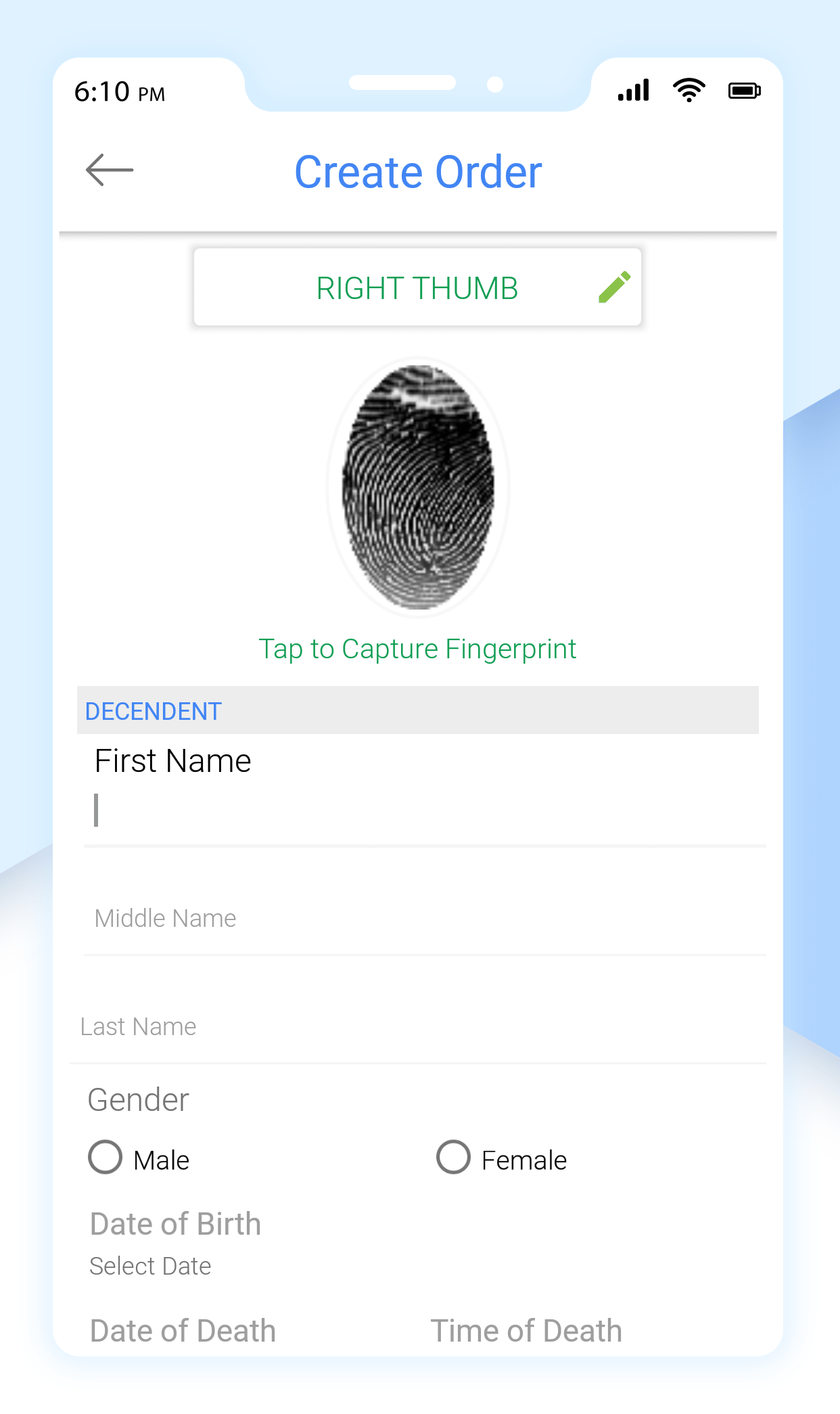
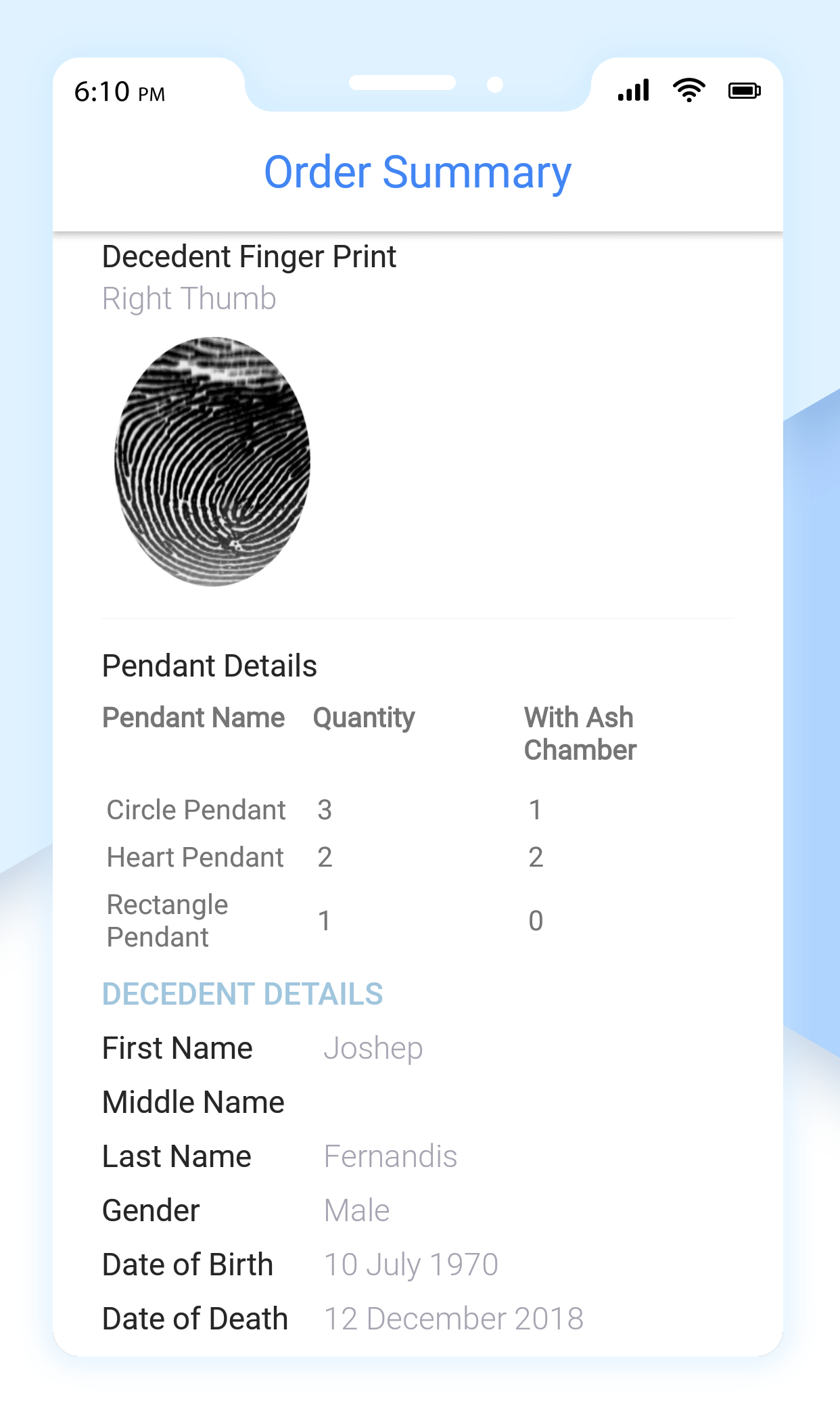
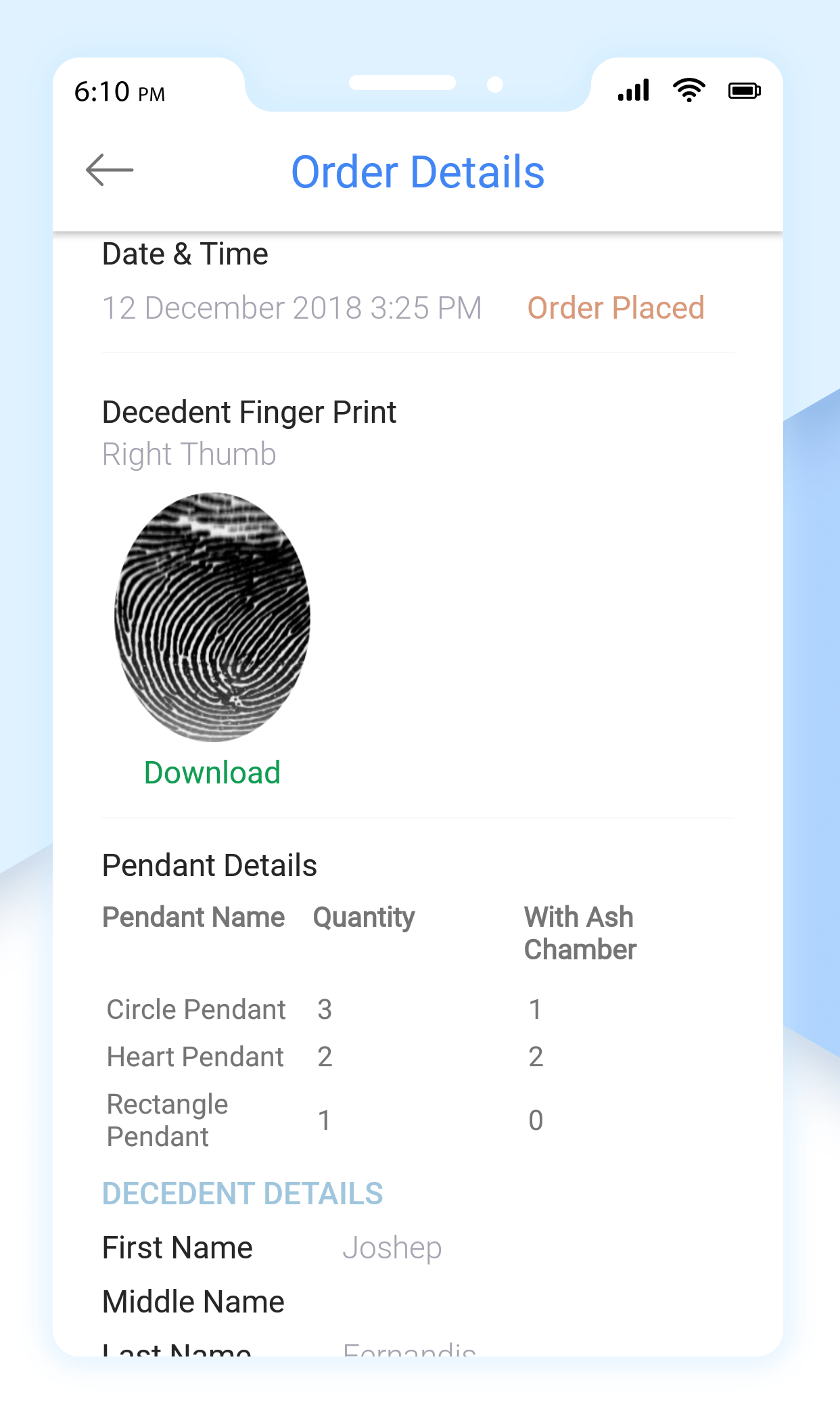
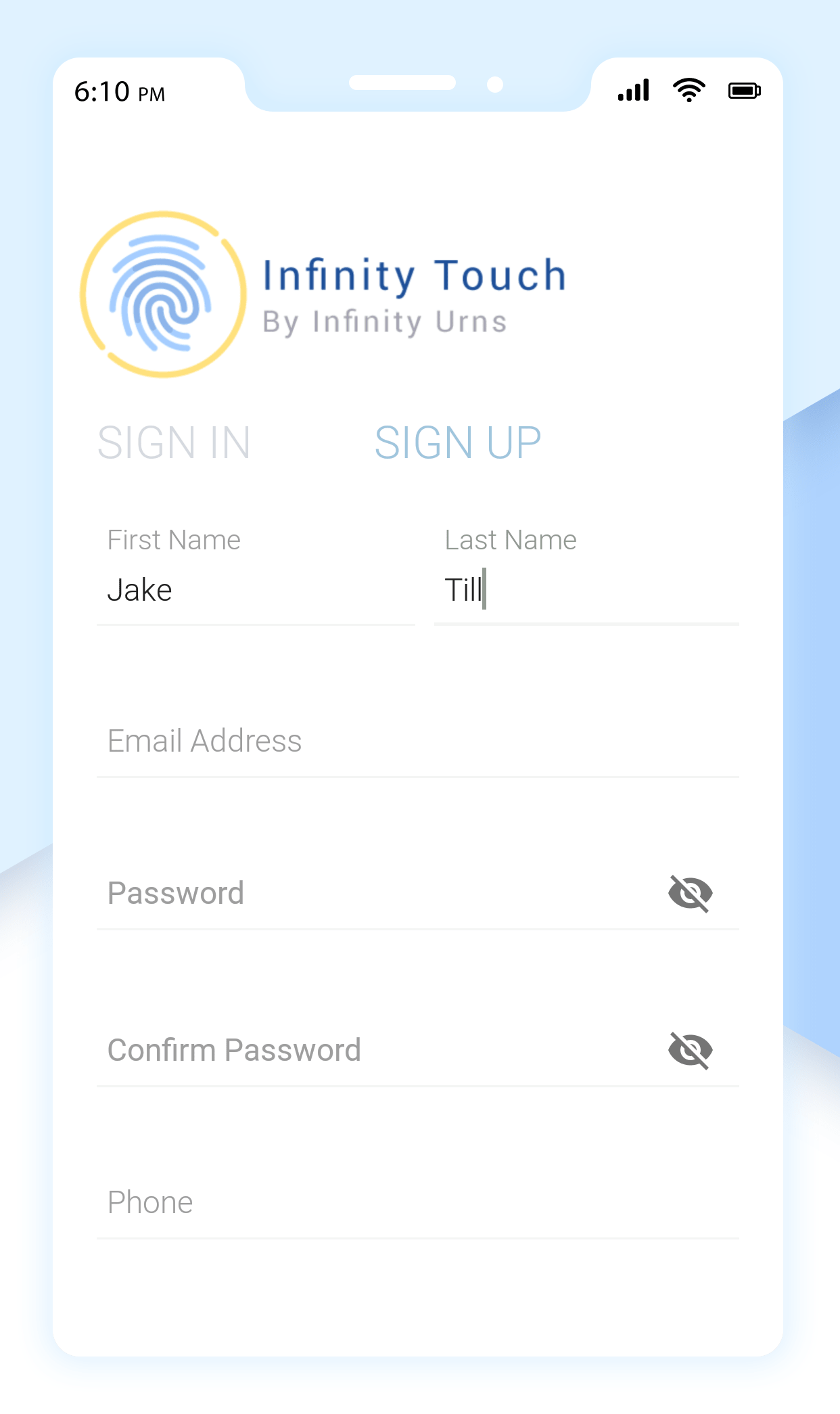
Infinity Touch is a comprehensive e-commerce and order chain management ERP customized for the memorial jewelry sector. Known for its distinct feature—fingerprint engraving on urns and jewelry—this platform bridges the gap between funeral homes and end customers.

 Java 7 (Android)
 RxJava
 Gradle
 HTML5
HTML5 jQuery
 Spring Boot 2
 REST API
 Maven
Maven Crashlytics
 Codomanage + Google Sheets
The fingerprint had to be clear enough to mill into jewelry, but it was being captured in real-world conditions through a consumer-grade Bluetooth scanner.
We tested several fingerprint devices and SDKs to balance price, performance and reliability, then layered in image processing to reduce noise and sharpen ridge detail before it ever reaches the jeweler.
Capture and ordering often happened in places with no reliable connectivity — the workflow couldn't be allowed to stall waiting on a network.
Captures and orders are stored in a local on-device database and synced automatically the moment connectivity is detected, with fail-safes to guarantee zero data loss.
Dealers, funeral homes and sales staff already had real working relationships — a generic app risked flattening those connections instead of respecting them.
We designed a referral-code system so the app mirrors and preserves the existing dealer-to-customer relationships, rather than replacing them with a flat, generic structure.